
Can You Taste Food With Dentures? Why Dental Implants Help You Enjoy Flavor Again
For many people who wear traditional dentures, one of the most frustrating surprises is how much their sense of taste changes. Foods that once felt rich, flavorful, and enjoyable suddenly seem muted or dull. If you’ve ever wondered, “Why can’t I taste food with dentures?”, you’re not alone, and there’s a clear clinical reason behind it.
At Facial Designs P.A., we help patients understand the real differences between dentures and dental implants, especially when it comes to eating, tasting, and enjoying everyday life. Below, we break down why taste loss happens with dentures, why dental implants restore flavor, and what you can expect when choosing a more stable, natural-feeling tooth replacement.
Why Can’t I Taste Food With Dentures?
Traditional dentures are designed to rest on top of the gums and are held in place by suction, adhesives, or both. While they can restore the appearance of a full smile and help you chew a wider range of foods, they also create a major barrier that affects taste.
1. Dentures Cover the Palate – Where Taste Buds Live
Most people think taste buds are only on the tongue, but a significant number are also located on the palate (the roof of the mouth). This area plays a surprisingly important role in how you experience flavor.
When a denture covers the palate:
- Taste buds lose direct contact with food
- Temperature and texture sensations become muted
- Aromas don’t circulate the same way, reducing flavor complexity
This is the primary reason patients report that food tastes “different,” “dull,” or “less enjoyable” with dentures.
2. Adhesives and Creams Alter Taste
Many denture wearers rely on adhesives to keep their dentures stable. Unfortunately, these products can:
- Leave a metallic or chemical aftertaste
- Mix with food during meals
- Create a coating that interferes with taste receptors
Even when used correctly, adhesives can noticeably change how food tastes.
3. Dentures Reduce Bite Force and Chewing Efficiency
Taste isn’t just about flavor; it’s also about texture, temperature, and aroma release. Because dentures sit on the gums rather than anchoring into bone, they provide much less bite force. This means:
- Food isn’t broken down as effectively
- Aromas aren’t released the same way
- The brain receives fewer sensory signals
All of this contributes to a less satisfying eating experience.
Can You Taste Food With Dentures at All?
Yes. But not fully.
Most patients can still detect basic flavors like sweet, salty, sour, and bitter. However, the subtle, complex flavors that make food enjoyable are often significantly reduced. Many describe it as eating with a “filter” or “barrier” between them and their food.
If taste and enjoyment of food are important to you, this is where dental implants make a dramatic difference.
Why You Can Taste Food With Dental Implants
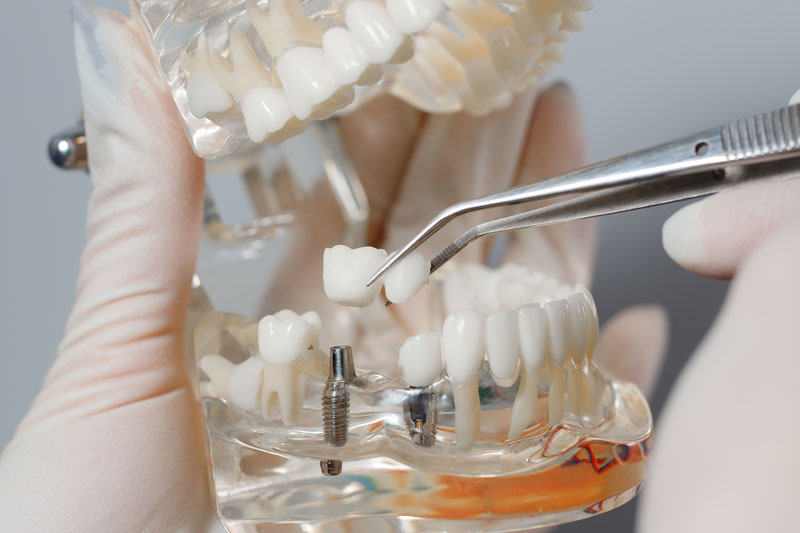
Dental implants are designed to replace missing teeth in the most natural, functional way possible. Instead of resting on the gums, implants are surgically placed into the jawbone, where they act like artificial tooth roots. This creates a stable foundation for crowns, bridges, or full-arch implant prosthetics.
1. Dental Implants Do NOT Cover the Palate
This is the biggest reason implants preserve taste.
Implant-supported teeth, whether a single crown or a full arch, leave the palate completely uncovered. That means:
- Taste buds on the palate remain fully exposed
- Food contacts the mouth naturally
- Temperature and texture sensations are restored
- Aromas circulate normally
Patients often tell us that eating with implants feels like eating with natural teeth again.
2. No Adhesives, No Aftertaste
Because implants are anchored into the bone, they don’t require:
- Adhesives
- Pastes
- Creams
- Powders
This eliminates the metallic or chemical taste that many denture wearers experience.
3. Stronger Bite Force = Better Flavor Release
Dental implants restore up to 90–100% of natural chewing power, compared to about 20–30% with dentures. This allows you to:
- Bite into crisp foods
- Chew thoroughly
- Release more aroma molecules
- Experience richer, fuller flavors
From crunchy apples to grilled steak to fresh vegetables, implants make eating enjoyable again.
Dental Implants at Facial Designs: A Better Long-Term Solution
At Facial Designs P.A., we see firsthand how dental implants transform not just smiles, but quality of life. Patients who switch from dentures to implants often say:
“Food tastes good again.”
“I didn’t realize how much I missed flavor.”
“Eating feels natural for the first time in years.”
Whether you’re missing one tooth or an entire arch, implants offer a stable, long-lasting, and taste-preserving solution.
Ready to Enjoy Food Again? Visit Facial Designs P.A.
If you’re tired of dentures affecting your ability to taste and enjoy your favorite meals, dental implants may be the solution you’ve been looking for. Our team, led by Dr. Rod VanSurksum and Dr. Clark-Gold, provides advanced, patient-centered implant care designed to restore confidence, comfort, and full oral function.
You deserve to enjoy every bite.
Let us help you get there.
Contact our Minnetonka and Excelsior team today to schedule your consultation and discover how dental implants can bring flavor back into your life.