
Why Are Abutments Needed in Dental Implant Procedures? Understanding Their Role in a Successful Implant
When people think about dental implants, they often picture the final tooth, the beautiful, natural-looking crown that completes their smile. But behind every successful dental implant is a small, essential component that makes the entire restoration possible: the abutment. If you’re considering dental implants, understanding the role of the abutment will help you appreciate how each part of the implant system works together to create a strong, long-lasting result.
Whether you need a single implant or a full mouth dental implant solution, the abutment is the connector that ensures stability, function, and aesthetics. Below, we break down why abutments are needed, how they support long-term success, and what you can expect during the placement process.
What Is an Abutment — and Why Is It Important?
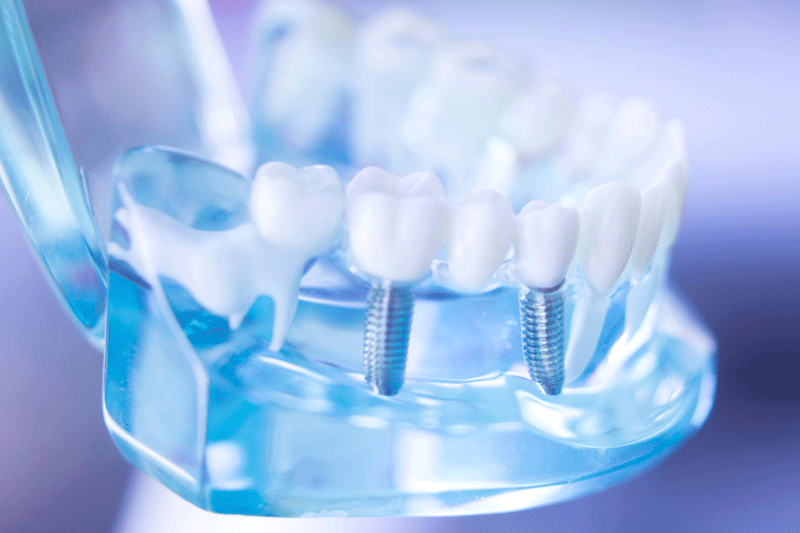
A dental implant is made up of three parts:
- The implant post (the artificial tooth root placed in the jawbone)
- The abutment (the connector piece)
- The crown or prosthesis (the visible tooth or full arch restoration)
The abutment is the middle component — but it plays a much bigger role than most patients realize.
1. Abutments Provide Strength and Stability
Once the implant post is surgically placed into the jawbone, it undergoes a healing process called osseointegration, where the bone fuses tightly around the implant. After this healing period, the abutment is attached to the top of the implant post.
This connection is what allows the implant to:
- Support chewing forces
- Stay stable during daily function
- Hold the crown securely in place
Without the abutment, the implant post and the crown would not be able to connect, meaning the restoration would not function like a natural tooth.
2. Abutments Help Maintain Healthy Gum Tissue
The design of the abutment also plays a key role in gum health. Because the abutment extends slightly above the gumline, it:
- Shapes the gum tissue for a natural appearance
- Prevents gum collapse around the implant
- Creates a clean, accessible area for brushing and flossing
This is especially important for long-term implant success. Healthy gum tissue helps protect the implant from infection, inflammation, and bone loss.
3. Abutments Support Natural-Looking Aesthetics
A well-designed abutment ensures that the final crown or prosthesis:
- Fits seamlessly
- Looks natural
- Matches the surrounding teeth
Supports the proper emergence profile (how the tooth appears to rise from the gums)
At Facial Designs P.A., we use abutments customized to each patient’s anatomy and smile goals. This level of precision helps create a restoration that blends beautifully with your natural teeth.
Why Abutments Are Essential in Every Dental Implant Procedure
Abutments are not optional; they are a required part of every implant system. Their purpose goes far beyond simply “connecting” pieces together. They influence:
- Function (chewing, speaking, biting)
- Longevity (how long the implant lasts)
- Comfort (how the restoration feels in your mouth)
- Appearance (how natural the final result looks)
In short, the abutment is the bridge between the implant post and the final tooth, and without it, the implant cannot perform like a real tooth.
Fill out our quick questionnaire below to see if you’re a candidate for dental implants.
How Are Abutments Placed During a Dental Implant Procedure?
The placement of abutments is a precise, multi-step process that happens after the implant post has fully integrated with the jawbone.
Step 1: Implant Post Placement
The implant post is surgically inserted into the jawbone. Over the next several months, the bone heals around the implant, creating a strong foundation.
Step 2: Abutment Attachment
Once healing is complete, the abutment is attached to the implant post. This step requires accuracy to ensure:
- Proper alignment
- Correct height
- A secure connection
- The gum tissue is then gently sutured around but not over the abutment.
Step 3: Gum Healing Around the Abutment
As the gums heal, they form a natural collar around the abutment. This creates the ideal shape for the final crown and helps protect the implant site.
Step 4: Temporary Prosthesis (If Needed)
While the gums finish healing, a temporary crown or prosthesis may be placed. This allows you to eat, speak, and smile comfortably while your final restoration is being crafted.
Step 5: Final Crown or Prosthesis Placement
Once healing is complete, the final crown or full-arch prosthesis is attached to the abutment, completing your new smile.
Learn More About Abutments and Dental Implants with Facial Designs
If you’re considering dental implants, understanding each part of the process helps you feel confident and informed. At Facial Designs P.A., we take the time to explain every step so you know exactly what to expect from implant placement to abutment attachment to your final restoration.
Our team, led by Dr. Rod VanSurksum and Dr. Clark-Gold, provides advanced, patient-centered implant care designed to restore your smile with precision, comfort, and long-term success.
Ready to learn more about how abutments support strong, beautiful dental implants?
Get in contact with our exceptional team today to schedule your consultation and take the next step toward a healthier, more confident smile.