
Oral Cancer Awareness and Why Early Detection Matters
Oral cancer often goes unnoticed in its early stages. It isn’t rare, but the first signs are subtle, painless, and easy to miss. At Facial Designs, P.A., we believe that awareness and early detection save lives. Understanding what to look for, what increases your risk, and how screenings work can make a life‑changing difference.
Understanding what to look for, what increases your risk, and how screenings work can make a life‑changing difference. This guide shares expert insights from Dr. VanSurksum. Our goal is simple: to help you stay informed and proactive about your oral health.
What Early Signs of Oral Cancer Look Like
Oral cancer can appear anywhere in the mouth, including the lips, tongue, cheeks, gums, and the floor of the mouth. Many early symptoms are painless, which is why they’re easy to overlook.
Common signs include:
- Non‑healing ulcers
- A sore on the lips or inside the mouth that doesn’t heal within two to three weeks is one of the most important warning signs. These ulcers are often painless, which makes them easy to ignore.
- White or red patches
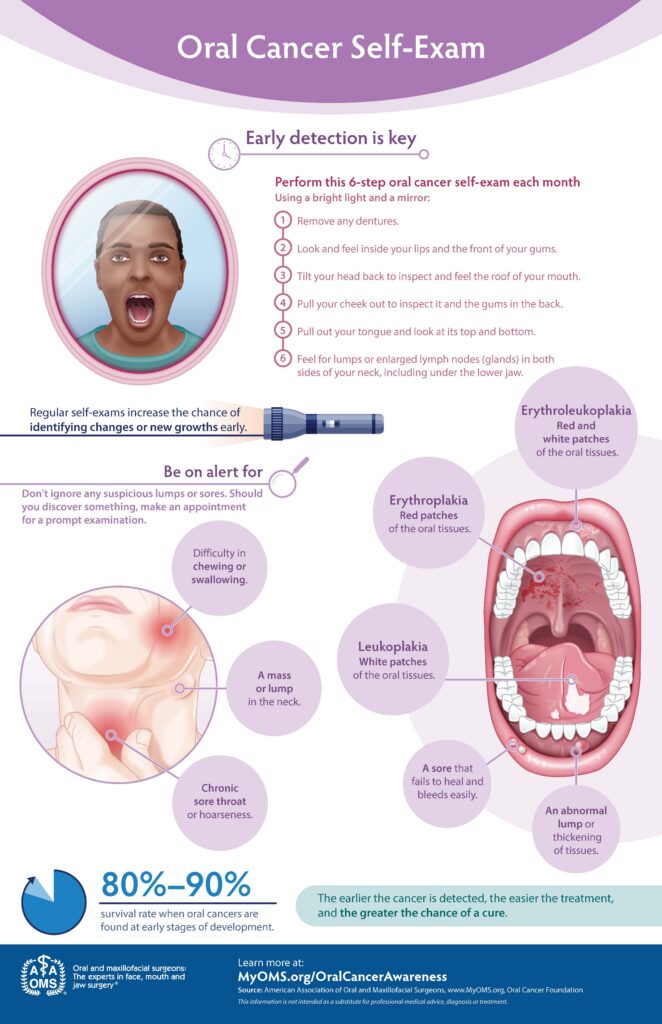
- Lesions may appear white (leukoplakia), red (erythroplakia), or a mixture of both. White patches form when tissue gets thicker. While some are harmless, others can be precancerous or cancerous.
- Non‑healing ulcers
- Changes on the lips from sun exposure
- The lips receive significant sun exposure over a lifetime. A clinician should evaluate a persistent, non-healing ulcer, especially one that doesn’t improve with Vaseline or ointment.
- Changes on the lips from sun exposure
Any lesion that doesn’t improve or continues to change should be examined by a dentist or oral surgeon. Persistent symptoms always warrant professional evaluation.
Everyday Habits That Increase Oral Cancer Risk
Certain lifestyle habits and health conditions can significantly increase the likelihood of developing oral cancer.
Key risk factors include:
- Smoking tobacco or cannabis: Inhaling flammable products into the mouth exposes tissues to heat and carcinogens, increasing irritation and long‑term risk.
- Regular alcohol use: Alcohol alone is a known risk. When you combine it with smoking, the risk grows more. It is not 1 + 1 = 2. It is closer to 1 + 1 = 3.
- Untreated GERD (acid reflux): Chronic acid exposure can irritate oral tissues over time, contributing to cellular changes that may lead to cancer.
Reducing or eliminating these habits can lower your risk, but regular screenings with Dr. VanSurksum remain essential, especially if you have a history of tobacco or alcohol use.
The One Symptom You Should Never Ignore
A non‑healing sore lasting more than two to three weeks, especially one that is painless, is a very important sign to take seriously.
This includes:
- A sore on the side or underside of the tongue
- A lesion on the floor of the mouth
- A spot that remains unchanged or worsens over time
If you notice something like this, contact Facial Designs. promptly. Only a professional evaluation can determine whether a biopsy is needed.
What Happens During an Oral Cancer Screening
Oral cancer screenings are quick, noninvasive, and typically part of routine dental visits. At Facial Designs, screenings are performed with precision and care.
During a screening, your provider will:
- Examine all tissues inside your mouth and the upper throat
- Look under your tongue using gauze to gently lift and dry the area
- Check for unusual tissue that appears white, red, thickened, or ulcerated
- Evaluate any lesions that don’t resolve on their own
If a suspicious area is found, Dr. VanSurksum may recommend a biopsy to determine the cause.
What to Expect if a Biopsy Is Needed
A biopsy is the best way to confirm whether a lesion is cancerous or benign. The process is straightforward:
- A small sample of tissue is removed—or the entire lesion if it’s small.
- The sample is sent to an oral pathology lab for microscopic evaluation.
- Results determine next steps, whether the lesion is benign, precancerous, or malignant.
This step is essential because many lesions look similar to the naked eye, and only microscopic analysis can provide a definitive diagnosis.
Treatment Options After a Diagnosis
If a biopsy confirms oral cancer or a precancerous condition, your surgeon will guide you through the next steps.
Treatment may include:
- Local excision
- Small, superficial lesions can often be removed in the clinic with clear margins.
- Lymph node evaluation
- Enlarged lymph nodes may indicate that cancer has spread, requiring additional imaging or referral to a cancer specialist.
- Surgical removal of affected tissue
- More advanced cases may require removal of deeper tissue or bone.
- Chemotherapy
- In addition to surgical excision, adjunctive chemotherapy may be required. This will be evaluated by your oncologist.
- Reconstruction and rehabilitation
- Some patients may need reconstruction, bone grafting, and dental implants to restore function and appearance.
Early detection often means simpler treatment and better results. That is why regular screenings and quick checks for changes matter.
Why Early Detection Saves Lives
Oral cancer is highly treatable when caught early. Many early lesions are small, localized, and manageable with minor procedures. Delayed diagnosis, however, can lead to more complex treatment and a higher chance of metastasis.
Staying aware of changes in your mouth and getting checked when something looks or feels wrong is one of the most powerful steps you can take for your long‑term health.
At Facial Designs, P.A., we’re committed to helping you stay informed, proactive, and protected.