
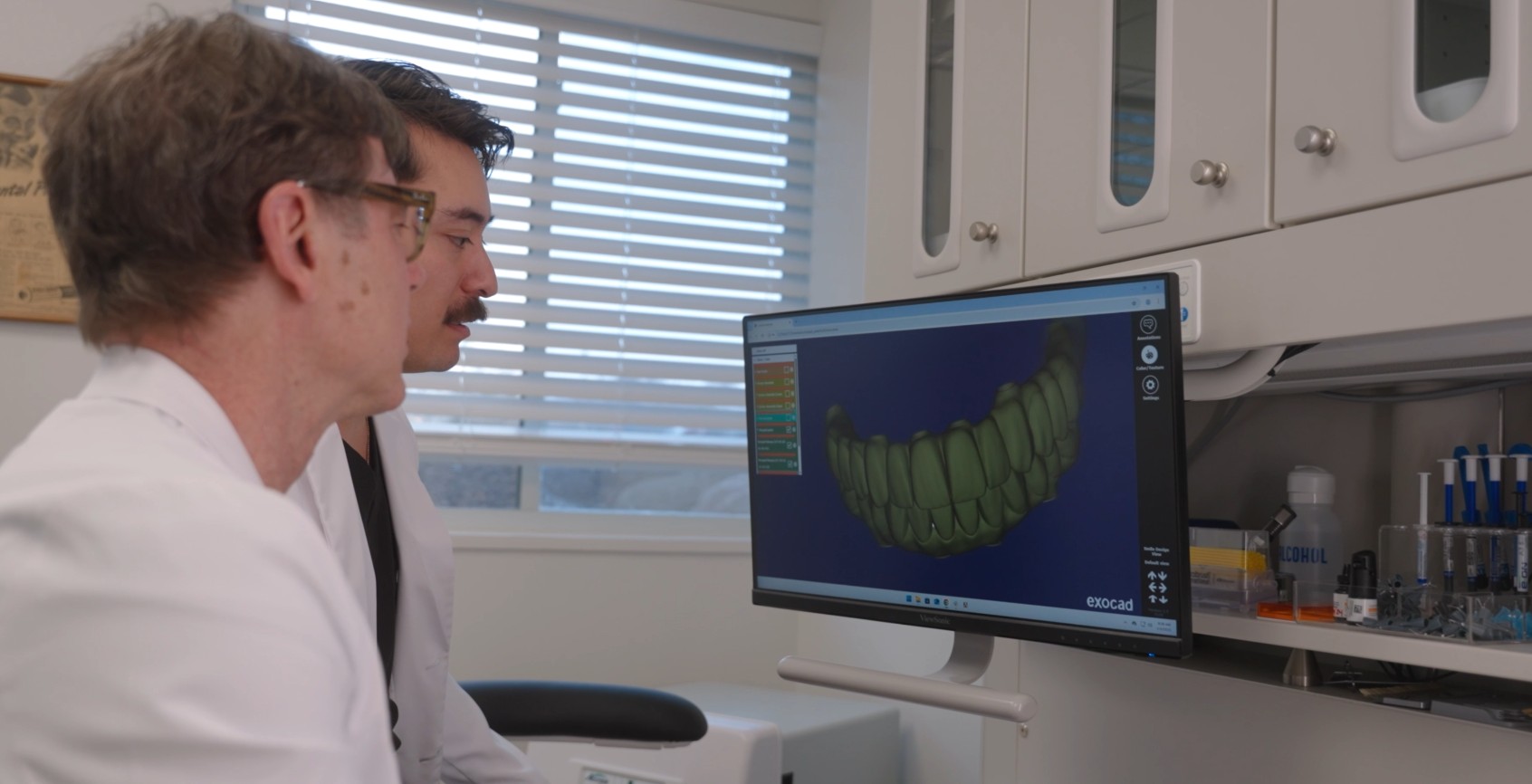
The Restorative Dentist’s Role in Full-Arch Dental Implant Treatment
When a patient needs full-arch dental implant treatment, their care may become more complex, but their relationship with their general dentist remains important.
General and restorative dentists often know their patients better than anyone else on the dental team. They understand their dental history, previous restorations, hygiene habits, expectations, and long-term oral health needs. When a patient is referred for complex implant treatment, that knowledge remains valuable.
At Facial Designs, we believe specialty care should support the bond between patients and their dentists, not replace it.
For patients with failing teeth, significant bone loss, or complex restorative needs, a team approach is beneficial. It brings together the referring dentist, oral surgeon, and prosthodontist. This creates a coordinated path from treatment planning through long-term care.
When Does a Full-Arch Case Become More Complex?
Not every dental implant case requires the same level of specialty care. Some patients may have straightforward needs, while others present clinical challenges that benefit from additional surgical and restorative expertise.
A dentist may consider referring a patient for specialty evaluation when there are concerns such as:
- Failing or non-restorable dentition
- Significant bone loss
- Multiple failing implants or previous implant complications
- Complex tooth extractions
- Limited restorative space
- Significant esthetic demands
- Occlusal considerations
- The potential need for advanced implant solutions
- A full-arch rehabilitation requiring surgical and restorative coordination
Referral doesn’t necessarily mean a case is beyond the abilities of the restorative dentist. Instead, it can provide additional resources when the complexity of a patient’s condition warrants multidisciplinary planning.
In these situations, involving the specialty team early can be particularly valuable.
Full-Arch Treatment Should Begin With the Final Restoration
Successful dental implant treatment isn’t simply about placing implants where bone is available.
The ultimate goal is to create a restoration that looks natural, functions appropriately, and remains maintainable over time. That means treatment planning should begin with an understanding of the desired restorative outcome.
Before implant placement, the treatment team may need to consider tooth position and prosthetic space. They may also consider occlusion, esthetics, and available bone. They should consider implant positioning and the patient’s ability to maintain the restoration.
Those considerations can influence surgical decisions.
This is one reason collaboration between surgical and restorative clinicians can be so important in complex full-arch cases. Rather than treating surgery and restoration as separate steps, the team can plan them together.
They can place the implant in a way that meets the needs of the final prosthesis.
This restorative-driven philosophy is central to Facial Designs’ approach to complex dental implant treatment. Surgical planning and restorative planning are linked from the start. This helps the team work toward the same outcome.
The Referring Dentist Is an Important Part of the Team
A referral shouldn’t mean starting over.
The referring dentist often brings years of knowledge about the patient to the treatment-planning process. That perspective can provide valuable insight into the patient’s:
- Dental and restorative history
- Previous treatment
- Existing restorations
- Occlusion and function
- Hygiene history
- Expectations
- Long-term dental needs
This information can help the specialty team better understand the patient’s current condition and their overall oral health.
The patient’s established dentist also remains an important resource once specialty treatment is complete.
At Facial Designs, our goal is not to replace the referring dentist-patient relationship. It provides specialized care when needed. It also supports the patient’s return to their dental home for ongoing care when appropriate.
Why an Oral Surgeon and Prosthodontist Work Together
Complex full-arch implant treatment involves two closely connected questions:
What surgical foundation does the patient need?
And:
What does the final restoration need to accomplish?
At Facial Designs, a board-certified oral and maxillofacial surgeon and prosthodontist work together to address both sides of the treatment plan.
Understanding the different roles of a prosthodontist and oral surgeon can help explain why collaboration between these two specialties is particularly valuable in complex full-arch treatment.
Building the Surgical Foundation
The oral surgeon evaluates the surgical considerations necessary to support the planned restoration. Depending on the patient’s needs, treatment may include extractions, bone evaluation, implant placement, bone grafting, management of complex anatomy, sedation or local anesthesia, and advanced implant solutions for patients with significant bone loss.
Planning the Restorative Outcome
The prosthodontist focuses on how the patient’s new teeth will look, feel, and function. Planning considers factors such as tooth position, esthetics, prosthetic design, occlusion, function, and long-term restorative needs.
The value of this approach isn’t simply having two specialists involved. It’s having surgical and restorative expertise working toward the same outcome.
Implants can then be planned with the final restoration in mind rather than treating implant placement and prosthetic design as independent decisions.
What Happens After Full-Arch Implant Treatment?
Full-arch treatment may transform a patient’s smile, but it doesn’t eliminate the need for ongoing oral healthcare.
Dental implants and their restorations require continued monitoring and maintenance. Depending on the patient’s situation, long-term care may include routine exams and professional cleaning. It may also include checks of peri-implant tissues and prosthetic parts. Continued care for any remaining natural teeth may also be needed.
This is another area where the patient’s general dentist plays an important role.
Specialty implant treatment should be viewed as one chapter in the patient’s overall dental care, not the end of their relationship with their dental home.
When clinically appropriate, the Facial Designs team wants patients to return to their referring dentist for ongoing comprehensive care, with clear expectations for maintenance and follow-up.
Communication Builds Better Referral Relationships
For a dentist, referring a long-time patient to another practice requires trust.
You want to know how the healthcare team will treat your patient, what they recommend, and what they will do after treatment.
That’s why communication should be an important part of the specialty referral process.
A strong referral relationship should include clear communication about the patient’s treatment plan. It should provide timely updates during care.
It should ensure easy access when questions arise. It should include a clear plan for long-term maintenance. It should also support a smooth transition back to the referring practice.
That collaborative philosophy is an important part of how Facial Designs works with referring dentists.
A referral shouldn’t feel like sending your patient away.
It should feel like expanding their care team.
When Should You Bring in a Dental Implant Specialist?
There isn’t a single point at which every implant patient needs specialty evaluation.
However, when significant bone loss, failing dentition, complex anatomy, previous implant complications, restorative challenges, or full-arch rehabilitation add complexity to a case, early collaboration can help the dental team better understand the available treatment options.
And a referral doesn’t always have to begin with a finalized treatment plan.
If you’re uncertain about the best path forward for a patient, a specialty consultation can help determine whether advanced treatment is appropriate and what role each member of the dental team can play.
Supporting Your Patient and Your Relationship With Them
The strongest referral relationships are built on mutual trust and a shared commitment to the patient.
Have a patient with a complex dental implant or full-arch case? Connect with the Facial Designs team to discuss the case, treatment considerations, and whether specialty evaluation may be appropriate.